Salmon on Ricelands Project
Showcasing how winter-flooded farm fields lead to healthy juvenile salmon populations in the Sacramento River.
One of the largest salmon releases of its kind, nearly 2 million salmon fry were introduced into winter-flooded rice fields in hopes of contributing to a healthy number of fish reaching the Pacific Ocean and returning to the valley as adults. The 10-year project places fall-run salmon fry from Coleman National Fish Hatchery into working ricelands at Conaway Ranch and Knaggs Ranch, located in Yolo County.
Why Wetland Habitats Matter to Our Native Fish?
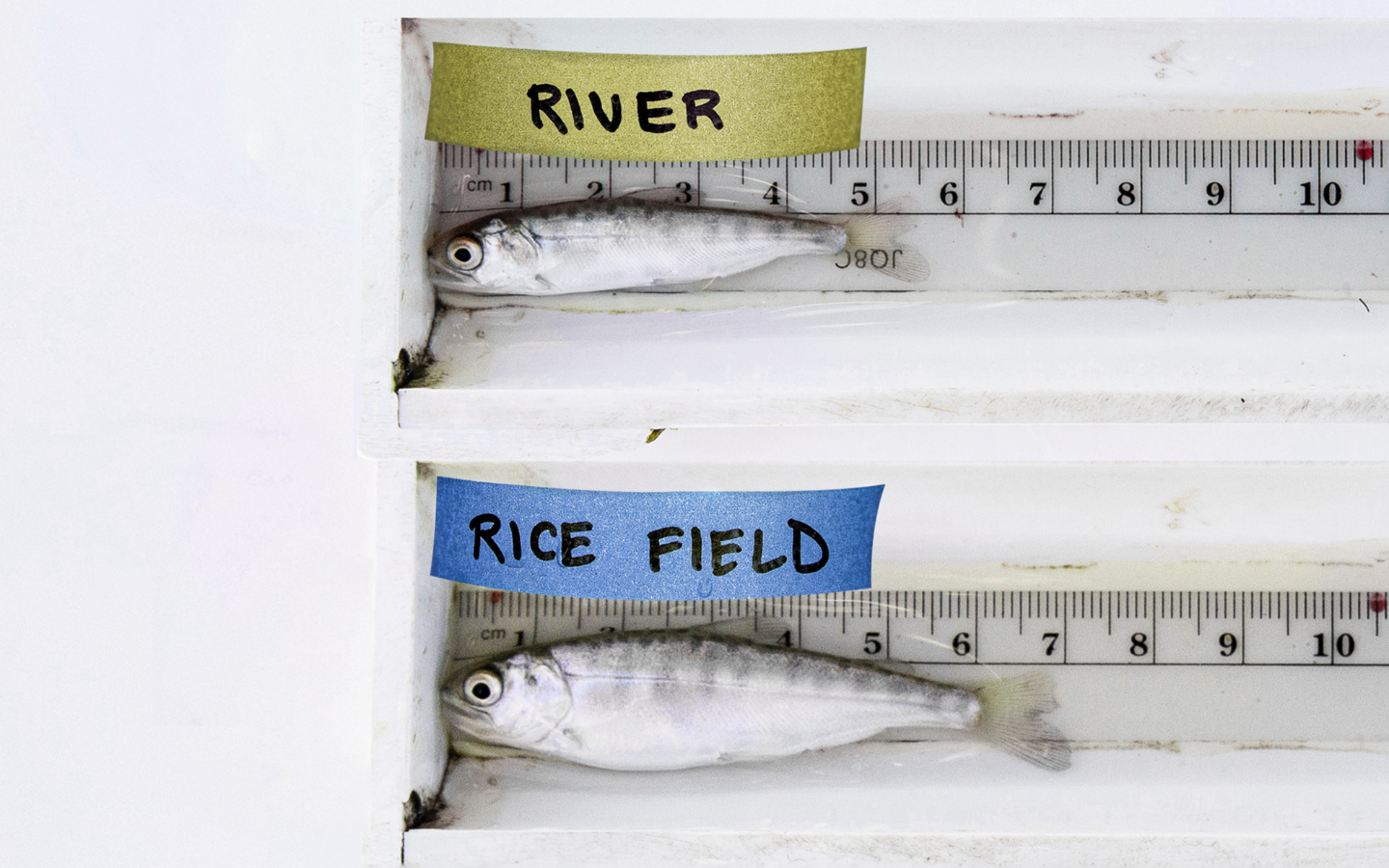
When fish gain access to wetland-like, food-rich habitats, they grow larger and are healthier than their counterparts confined to leveed river channels according to research from UC Davis, the California Department of Water Resources, and California Trout.
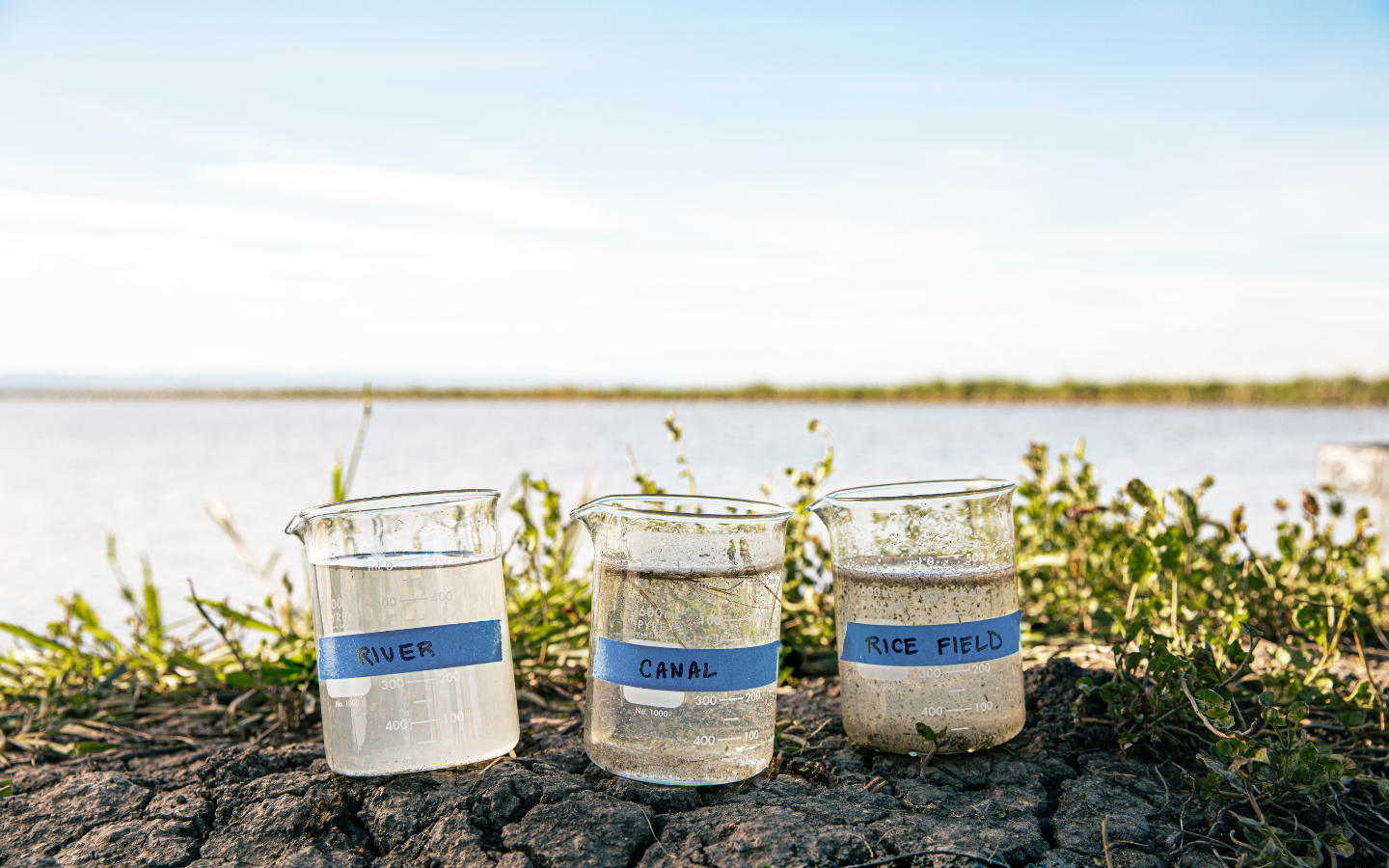
This project builds on years of innovation using rice fields to mimic historic floodplains. These intentionally flooded fields create ideal feeding grounds, where juvenile salmon consume abundant zooplankton and grow two to five times faster than in rivers—boosting their size, strength, and chances of reaching the Pacific Ocean.
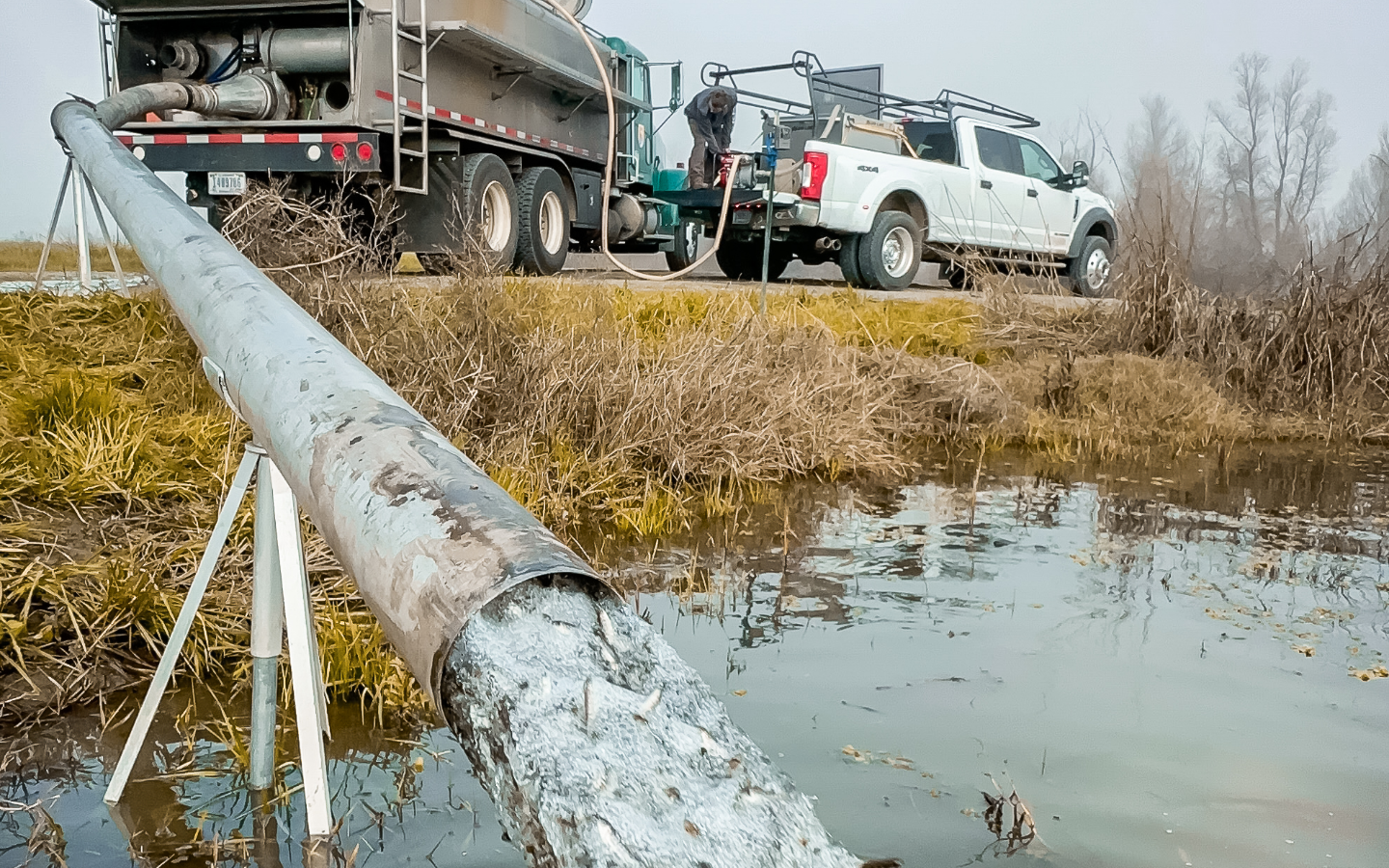
Originally developed for natural-origin salmon, this approach is now expanding to hatchery fish, enabling larger-scale implementation and evaluation.

Proof is in the Science
Additional UC Davis research shows that juvenile salmon raised on floodplains are more likely to return as adults. Scientists track fish life history using eye lenses and otoliths—ear structures—that reveal where fish were born, traveled, and fed through distinct chemical signatures. This project builds on that work by using advanced genetic monitoring to estimate adult returns from fish reared on flooded farm fields.
Thank You to Our Partners
Special thanks to the U.S. Fish and Wildlife Service and the staff at the Coleman National Fish Hatchery for their support and donation of the two million juvenile salmon.
Additional support comes from the USDA Natural Resources Conservation Service, the Floodplain Forward Coalition, and the U.S. Bureau of Reclamation.