
Member Spotlight December 2025
Benden Farms - A Family Legacy of Farming and Stewardship
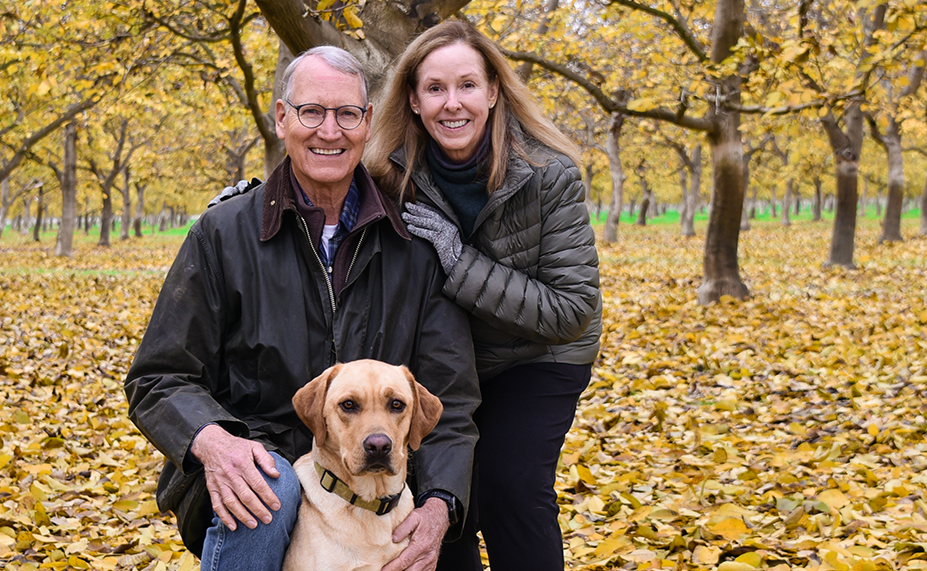
“The soil is our most important resource. And it's very shortsighted to not take care of it, because in the long run it won't take care of you.”
Ben Carter was born and raised in Colusa, and went away to school and work “Dad said he wanted me to learn on someone else’s nickel” While in Southern California, he met his wife, Denise. While working for some of the biggest names in technology and oil, an opportunity came up for the couple to relocate to Colusa, they saw it as a wonderful place to raise their children and continue the family legacy.
“Our family has been on this dirt for 75 years, and so this was a special opportunity for me to work with my father and be my own boss,” said Ben Carter. “I think I have a close kinship with this property having grown up here.”
Over the years, the couple raised their two children on the property that predominantly runs along the east bank of the Sacramento River. Spanning 3,000 acres, Benden Farms is known for its rice fields, orchards, dry beans, vine seed production and even livestock – all cultivated with a strong focus on regenerative and/or organic practices. Throughout the decades they have become leaders in the regenerative-organic farming movement.
Deeply rooted in the community, the Carters have contributed far beyond their farm. Ben served for many years on the Central Valley Flood Protection Board, and Denise spent over a decade as a Colusa County Supervisor. Their dedication to agriculture, environmental stewardship, and community resilience runs deep.
Benden Farms occupies a key spot as the Moulton Weir sits on their property and overflows across their land to the east. at the intersection of the Sacramento River and its historic floodplain. This unique geography—and the Carters’ collaborative spirit—has made the farm central to Floodplains reactivation efforts such as Floodplain Reimagined, an initiative exploring multi-benefit projects that improve flood safety, sustain agriculture, and enhance habitat for native fish, including Chinook salmon.
“We really appreciate the work that the Sacramento River Settlement Contractors and the farmers are doing to improve wildlife habitat. We're happy to be a part of and contributing to this effort,” Carter added.
By opening their gates to scientists, engineers, and resource agencies, the Carters are helping develop practical solutions that reconnect the river to its floodplain. Their willingness to innovate, building on a long history of conservation-minded farming, demonstrates how private landowners can lead in salmon recovery while continuing to grow food and fiber for California.
The Sacramento River Settlement Contractors are known for collaboration, innovation, and hard work—and we are grateful for members like Ben and Denise Carter, who embody these values so profoundly.