
Partner Spotlight
Randy Smith - Aiding Endangered Salmon along Redding’s River Banks
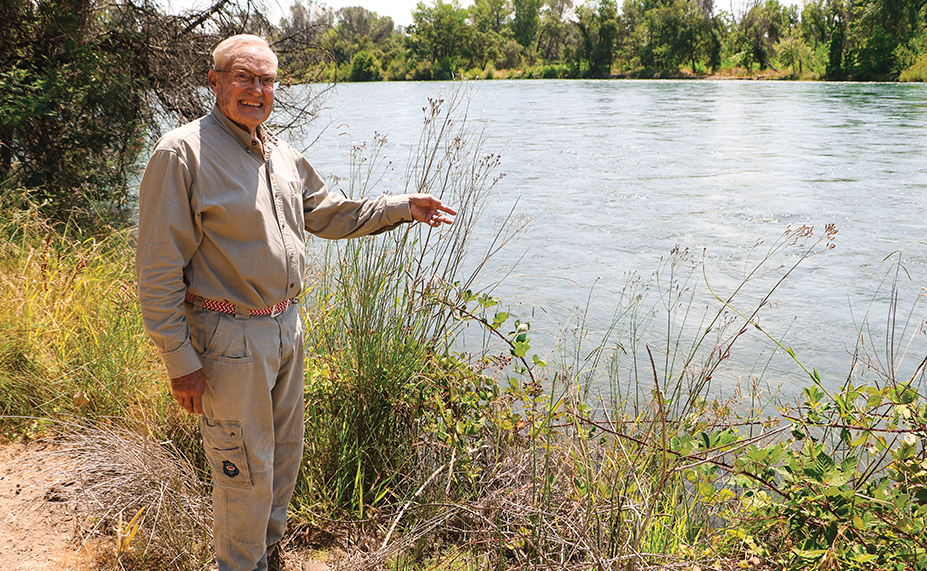
On a cool morning along the Sacramento River in Redding, Randy Smith walks the floodplain he has tended for years, pointing out stands of native grasses and freshly cleared banks. At 80, he still moves with purpose.
“I’ve been a card-carrying, tree-hugging environmentalist since I was probably four years old,” he said with a laugh.
A retired doctor and longtime Rotarian, Smith now leads the Allied Stream Team, a volunteer effort that has logged thousands of hours restoring habitat along the river corridor. At the Riverview Golf and Country Club site, Smith estimates he has participated in more than 350 days, totaling some 4,500 hours of labor.
When he first toured the floodplain that hugs the east bank, it was choked with Himalayan blackberry, Spanish broom and other invasive plants.
“You couldn’t even see the river from here,” Smith said from a few feet away of the rushing water.
In the last four years, volunteers have removed dense thickets, hauled debris and completed hundreds of safe burn piles to reopen floodplain surfaces that fish once had routine access to. Native species such as blazing star, cottonwood saplings and timothy grass are also now returning, which is the great delight of Smith.
For Randy, the work has always been about the salmon. He talks about the fish with a mix of scientific precision and reverence, describing their ability to navigate hundreds of miles back to their natal streams and the specific gravel, depth and flow they require to spawn.
“This could be hundreds of salmon nests,” he said, gesturing toward a shallow bar scoured clean by winter flows. “It’s everything they need — just a little too fast at today’s flow. But with the right shaping, it could be perfect.”
Smith stresses that the project is a partnership. Riverview Golf and Country Club provided access; Rotary supplied volunteers and equipment; regional agencies offered technical support and the Sacramento River Settlement Contractors will soon help take the project into the next phase of rehabilitation.
“You don’t need a Ph.D.,” Smith said. “You just need to care enough to get out here.”
For him, the reward is simple.
“It’s necessary. It’s good exercise. And it’s meaningful,” said Smith.
And he hopes the work will continue long after him.
“This floodplain just needs to be what it once was — as soon as possible,” said Smith.